 Free worldwide shipping
Why the World's Richest People Don't Let Their Kids Use Smartphones

The people who built the most addictive technology on Earth have been quietly making sure their own children stay away from it.
The CEO of Apple wouldn't let his kids touch an iPad. The founder of Microsoft delayed his children's first phones until age 14. The chief technology officer of eBay sent his kids to a school in Silicon Valley that bans screens completely.
These aren't isolated eccentricities. For more than a decade, the people who designed and got rich from the most attention-grabbing technology in history have been quietly making sure their own children grow up without it. That should make you pause.
The most famous dinner conversation in tech
In late 2010, just months after Apple launched the iPad, New York Times journalist Nick Bilton asked Steve Jobs whether his kids must love the new device.
Jobs's answer became one of the most quoted moments in tech journalism. He told Bilton his children hadn't used it. "We limit how much technology our kids use at home."
The man who'd told the world the iPad offered an incredible experience wouldn't let his own family near one. After Jobs died in 2011, biographer Walter Isaacson described family dinners at the kitchen table, evenings spent discussing books and history. No one pulled out a tablet.
It would have been easy to dismiss this as one contrarian founder's quirk. But the more Bilton looked, the more he found the same pattern across the Valley.
It wasn't just Jobs
Bill Gates set the same limits at home. His three children weren't allowed cellphones until age 14, weren't allowed phones at the table, and complained that all their friends had them earlier. The family also enforced screen cutoff times to protect sleep. You can reads more about this in our post on reducing screen time of our children.
For context, the average American child today gets their first smartphone around age 10. By 14, over 90% of US kids own one. Gates was holding the line years past the average.
He wasn't alone. Mark Cuban required his daughter to hand in her phone at 10pm on weeknights. Chris Anderson, the former editor of Wired, has spoken openly about strict screen limits at home; his kids accused him of being a "fascist" about technology. Evan Williams, a Twitter co-founder, talked about giving his kids physical books instead of tablets.
And then there's the school.
The Silicon Valley school that bans screens
In the foothills of the Santa Cruz Mountains sits the Waldorf School of the Peninsula. Chalkboards. Knitting. Pen and paper. No iPads. No Chromebooks. No screens at all, and the school discourages them at home too.
Its student body? The chief technology officer of eBay sends his children there. So do employees of Google, Apple, Yahoo, and Hewlett-Packard.
The pattern was so striking that the New York Times wrote it up in 2011 under the headline "A Silicon Valley School That Doesn't Compute." More than a decade later, the school is still oversubscribed, still drawing the children of people whose paychecks come from selling screens to everyone else.
NYU professor Adam Alter, author of Irresistible, put it bluntly: tech executives behave at home like people who know something the rest of us don't. So what do they know?
Because phone bans in the US are mostly bottom-up - introduced at the county, district, or individual school level - some countries have taken a much more aggressive national approach.
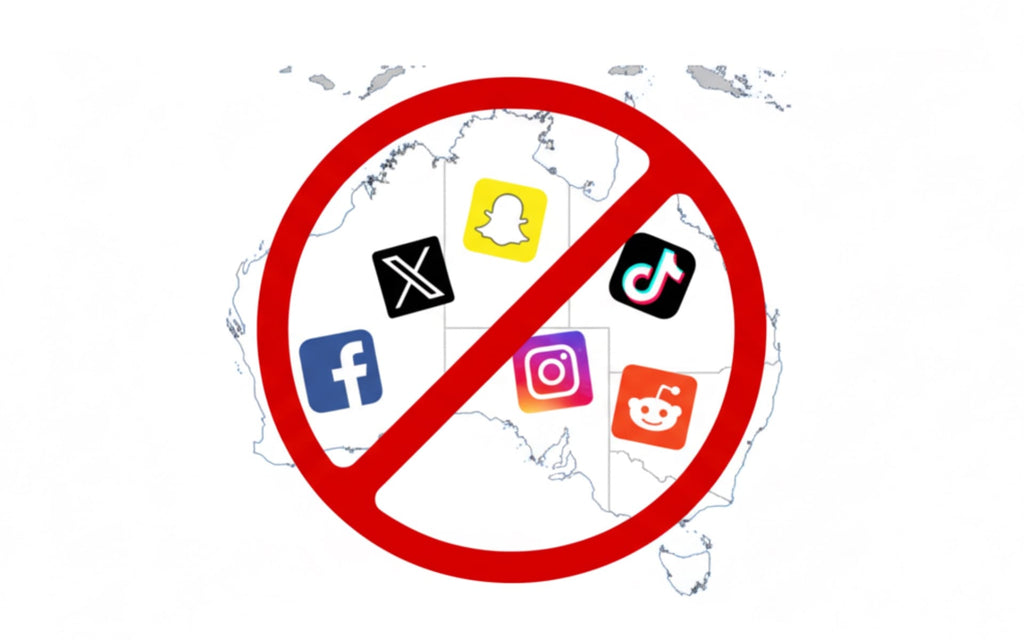
A good example is Australia’s country-wide social media ban for children under 16, which treats excessive digital exposure as a public policy issue rather than something left only to parents or schools.
What the builders admitted
For years, the answer was an open secret. Then, in 2017, two of the people most responsible for Facebook's design said it out loud.
Sean Parker, Facebook's founding president, sat down at an Axios event in November 2017 and openly described the network as something engineered to hijack attention. He said Facebook was built to answer one question: how to consume as much of your time and conscious attention as possible. The likes, comments, and notifications were a social validation feedback loop, designed to exploit a vulnerability in human psychology.
A few weeks later, Chamath Palihapitiya, Facebook's former VP of user growth, stood at a Stanford GSB event and said he felt "tremendous guilt" about what he had helped build. He described the platform's short-term, dopamine-driven feedback loops as destroying the way society works, and added that his own children weren't allowed to touch it.
The people who built it told us, on the record, that it was engineered to be addictive. And then they made sure their own families weren't on the receiving end.
The data finally caught up
For years, this story had a counterweight: maybe the tech executives were overreacting. Then the data started arriving.
In 2024, social psychologist Jonathan Haidt published The Anxious Generation, drawing on a decade of research into what happened to teenagers after the smartphone became ubiquitous. His central finding: after more than a decade of stable adolescent mental health, rates of depression, anxiety, self-harm, and suicide rose sharply in the early 2010s, more than doubling on many measures.
The timing was specific. The shift didn't happen in 2007 when the iPhone launched. It happened around 2012, when the front-facing camera became standard and Instagram became where teenagers performed their social lives. Haidt found the same pattern across the English-speaking world and much of Europe. Girls were hit harder than boys. Adults over 30 were largely unaffected.
His playbook is now widely cited: no smartphones before high school, no social media before 16, phone-free schools, a return to play-based childhood. It's almost word for word the playbook Silicon Valley executives have quietly been running for fifteen years. It's also the principle Scrolly was designed around: healthier defaults have to be built in, not negotiated in the moment.
What this means for the rest of us
The people in this article didn't quit technology. They shaped their relationship with it. Steve Jobs ate dinner with his family. Bill Gates set a cutoff time. Mark Cuban installed monitoring software. The Waldorf parents weren't running from technology; they were sequencing it, keeping the powerful tools away from underdeveloped attention systems, then introducing them later.
What unites all of these decisions is something the industry rarely talks about: friction.
The default settings on every modern app are calibrated to remove every possible friction between you and the next dopamine hit. Infinite scroll. Autoplay. Push notifications. The whole stack is engineered to make the next minute of use frictionless. The people who built that stack know, better than anyone, that reintroducing friction is the entire game.
That's what putting your phone in a drawer is. That's what handing it in at 10pm is. That's what sending your kids to a Waldorf school is.
A note from us
That's why we built Scrolly: a funny-looking device that creates physical friction in access to phone to cut screen time.
How it works:
1. Pick apps to block
2. Tap Scrolly
3. Enjoy focus time
+ Plus a gamified layer to build the habit: group challenges, witty Scrolly comments, and charity donations when you exceed your limit.

The richest people in tech worked out the answer twenty years ago. They just didn't make it easy for everyone else to follow them. We're trying to fix that.
Learn more about Scrolly at scrollyapp.io.